250 State St, Dickson, TN 37055
Follow us:

Signs of Fentanyl Abuse

Recognizing the Signs of Fentanyl Abuse

The increasing prevalence of fentanyl in communities across the country has made it more important than ever to understand the signs of its abuse. Fentanyl is a powerful synthetic opioid that, while effective for managing severe pain, poses significant risks when misused or consumed without medical supervision. From behavioral changes to serious physical and psychological symptoms, recognizing fentanyl abuse signs could make the difference between early intervention and devastating consequences. If you’re in Nashville or nearby, knowing the resources for fentanyl detox and treatment can save lives.

Understanding the warning signs of fentanyl abuse and the symptoms it causes is crucial for addressing addiction early. Whether it’s uncharacteristic fatigue, social withdrawal, or physical health warnings, being alert to these indicators can help you or your loved one take the next steps toward recovery. Continue reading to explore key insights into detecting fentanyl abuse, seeking professional support in Nashville, and finding hope through effective addiction treatment programs.

Fentanyl alleviates severe pain from surgery or injury and is a potent and heavily monitored medication. Unfortunately, the signs of fentanyl abuse are present through the high numbers of overdose deaths due to this drug. Legitimate prescriptions facilitating the needs of those with high pain levels, fentanyl has put those with a substance use disorder in grave danger. Illegally produced fentanyl is the cause of death from unintentional fentanyl poisoning throughout the United States.

Illegal fentanyl is extremely attractive due to the euphoria it induces, but it is also highly addictive and unregulated, causing an escalating risk. Illicit fentanyl has unknown toxic substances that add to the dangerous consequences. Prescription misuse and abuse of fentanyl is another high-risk choice. It is essential to know and recognize the signs of fentanyl abuse because the fentanyl crisis is everywhere and deadly.

What is Fentanyl?

Fentanyl is a synthetic opioid in 2 types: pharmaceutical and illegally produced. The primary purpose of fentanyl was to treat cancer pain and other excruciating health conditions. Fentanyl binds to the natural opioid receptors in the brain immediately after ingestion to induce an intense sense of euphoria while relieving the extreme pain. Prescription fentanyl is available as a skin patch, dissolvable tablets, or film.

Opioids are highly addictive, and those with a legal prescription can quickly develop abuse or addiction, and fentanyl is one of the most potent opioids. It is possible to create an addiction after only one drug use. Fentanyl is fifty times stronger than heroin and one hundred times stronger than morphine. Small doses of fentanyl can be deadly; therefore, the signs of fentanyl abuse must be available when issuing a prescription.

Fentanyl Statistics

The U.S. The Drug Enforcement Administration (DEA) claims that over one hundred fifty people die daily from synthetic opioids like fentanyl. Illegal fentanyl contains unknown substances, which increases the risk of overdose. Unfortunately, contributing to the opioid crisis, illicit fentanyl is unknowingly added to other drugs, causing overdose and death. It is not uncommon to find a combination of fentanyl and heroin used intravenously.

The statistics surrounding fentanyl are grim. The Centers for Disease Control states that the rate of overdose deaths involving synthetic opioids in 2021 was approximately 22 times greater than in 2013. Additionally, in 2021, nearly 71,000 deaths were related to synthetic opioids other than methadone. One-fifth of those taking prescription fentanyl were misusing it in 2021. And finally, an unbelievable statistic states that since 2017, fentanyl trafficking offenses have escalated by 950%.

The signs of fentanyl abuse can appear in those taking legal prescription fentanyl. Deaths from overdose as a result of legal prescriptions continue to rise. Prescription fentanyl is the answer for those who have tried other opioid pain medications without relief. Highly addictive and deadly if abuse is present. Thus, understanding what to look for that would indicate a problem is crucial.

Illegally made fentanyl (IMF) is a street drug in different forms, such as liquid or powder. Combination forms of illicit fentanyl include heroin, cocaine, and methamphetamine. The liquid form of fentanyl is sold as a nasal spray, eye drops, and dropped onto paper or candy. Other drugs can contain a small amount of fentanyl, with users unaware, thus causing overdose or death.

Street names for illegally made fentanyl include the following:

  • Apache
  • Dance Fever
  • Friend
  • Goodfellas
  • Jackpot
  • Murder 8
  • Tango and Cash

What Are The Effects of Fentanyl?

The signs of fentanyl abuse are recognizable through behavior, physical condition, and thinking changes. These changes accumulate, causing adverse consequences in all aspects of life. The signs and symptoms of abuse are warning signs resulting in the following effects.

Without treatment, those abusing fentanyl can face fatal or severe possibilities, including:

  • Overdose and even death
  • Physical damage to vital organs
  • Possibility of contracting HIV or hepatitis
  • Escalation in the severity of other health conditions
  • Sexual dysfunction
  • Lifestyle problems with relationships and work
  • Loss of child custody
  • Isolation, the result of the failure in relationships
  • Legal difficulties
  • Addiction to other illicit substances

Watching for the following signs and symptoms of fentanyl abuse could lead to treatment:

  • Extreme drowsiness, fatigue, and even nodding off inappropriately
  • Slurring of words and lack of coordination
  • Inability to attend to responsibilities and relationships
  • Swollen hands and feet
  • Extreme moodiness
  • Constipation, nausea, and vomiting
  • Taking a prescription more often than the prescription calls for
  • Financial troubles

Fentanyl Withdrawal

After recognizing the signs of fentanyl abuse, it is imperative to seek treatment. Abusing fentanyl over a short time will develop a tolerance and dependence on the drug. The brain and the body require medication to maintain certain functioning levels. When dosages drop or cease, the body will experience withdrawal symptoms, which can be severe with fentanyl.

Withdrawal symptoms from fentanyl include any of the following:

  • Muscle aches
  • Abdominal cramps
  • Runny nose
  • Dilated pupils
  • Extreme fatigue
  • Fever
  • Diarrhea

What To Do If A Loved One Has A Fentanyl Addiction

Once the signs of fentanyl abuse are apparent in a loved one, it is time to search for a treatment center to treat fentanyl addiction. Medically monitored detox is the safest method, so making a list of centers with these criteria can be helpful.

It can be tough or challenging to voice concerns with a loved one about drug abuse. Taking a nonjudgmental and loving approach will help break through denial and defensiveness. Becoming a solid support system for a loved one may take some educational time to learn how to support in a healthy, positive manner.

Being supportive can be stressful at times but also life-saving. Those with a strong support system have better odds of successful treatment completion. Participating in family and other group sessions can be rewarding for all parties.

Fentanyl Detox

Due to the toxicity of fentanyl and the synthetic derivatives of fentanyl, detoxification is mandatory before treatment can begin. An assessment is the initial step upon intake to determine the personal factors of the habit. A healthcare provider must evaluate the patient’s condition and obtain a health history. Medically monitored detox is the safest form of detoxification.

Pharmaceutical intervention is also known as medication-assisted treatment (MAT). Medication management allows for using other drugs to ease withdrawal symptoms for the patient’s comfort. A professional healthcare provider prescribes medications, and the medical team monitors the medication’s effectiveness. Treatment can begin once the detox is done to move closer to sober living.

Find A Safe Detox Program for Fentanyl Abuse in Tennessee

With so many addiction treatment centers, searching for detox for fentanyl abuse may seem impossible. Freeman Recovery Center is the ideal treatment center for fentanyl detox, offering medically monitored detox programs which is the safest form of detox. Family and friends play an essential role in recovery, so we look forward to working with the loved one’s support team.

We offer comprehensive rehabilitation services such as sober living programs, residential inpatient, and outpatient programs meticulously tailored to address a wide spectrum of substance use disorders. Our specialized programs cater to individuals battling alcohol addiction, drug addiction, cocaine addiction, heroin addiction, meth addiction, opioid addiction, benzo addiction, and prescription drug addiction. By combining evidence-based practices with holistic care, we deliver empathetic and professional support that focuses on the unique needs of each patient. Our goal is to create a nurturing environment where teenagers and their parents feel encouraged and empowered to overcome addiction, achieve lasting recovery, and rebuild their lives with confidence and resilience.

We welcome you to contact us, so we can answer questions, describe our successful treatment methods, and offer encouragement for a successful recovery.

 Related Addiction Treatment Articles

What is Polydrug Use?

Understanding the Risks and Realities of Polydrug Use

Polydrug use involves the dangerous practice of consuming multiple substances either simultaneously or within a short time frame. But what exactly is polydrug use, and why is it so risky? Whether it’s combining alcohol with prescription medications, or illicit drugs with one another, the effects of polydrug use can be unpredictable and often life-threatening. Polydrug users may seek to amplify or counteract the effects of one drug by adding another, but this practice significantly increases the risk of overdose, severe health complications, or even death. Understanding the complexities of polydrug use is critical to addressing this pervasive issue.

The dangers of polydrug use go beyond the immediate physical effects. This behavior can lead to addiction, known as polydrug addiction, and create a cycle of dependence that impacts every aspect of a user’s life. Defining polydrug use highlights the harm it causes, not only to individuals but also to their families and support systems. From heart complications to cognitive impairment, the effects of polydrug misuse are serious and demand professional intervention. To learn more about the definition of polydrug use, potential risks, and how treatment can provide hope and recovery, continue reading to explore this critical topic further.

Individuals using multiple substances to achieve a desired effect for recreational use have a problem. Mixing substances such as drugs and alcohol or 2 types of legal or illicit drugs often amplify the effects. Another reason for polydrug use is to use one drug to counteract the effects of another drug. In any case, polydrug use increases the danger of overdose and adverse symptoms.  As such, getting detox is vital.

Defining Polydrug Use

People diagnosed with polydrug use may wonder, what is polydrug use? The specific term polydrug points to polysubstance use as well in some diagnoses. According to the Centers for Disease Control (CDC), in 2019, nearly half of drug overdose deaths involved polydrug use. Polydrug use can be intentional or unintentional, but those with unintended use often forget to tell their healthcare providers about other drugs they may be taking when receiving a new prescription.

Polydrug use involves both illicit and legal substance use simultaneously within a short timeframe. Alcohol is a common choice for polydrug users. People with polydrug use possess knowledge of the effects of different drugs. Unfortunately, using more than one substance can be very dangerous. Continual use of more than one substance develops additional risks of overdose.

For those still wondering what is polydrug use, here are some examples. Using sleeping pills to counteract the stimulating effects of methamphetamine is one form of manipulating the effects of drugs. A perilous combination is methamphetamine laced with fentanyl for a particular outcome. Those who combine 2 separate opioids are at increased danger of inducing breathing difficulties.

Reasoning behind polydrug use may include the following factors:

  • An inability to access specific drugs results in substitutions to achieve the same desired effect.
  • Someone drinking alcohol may not consider the impact of taking another substance at the same time.
  • An uninformed attempt to reduce dependence on one drug by using combinations of others.

Polydrug Use Stats

Alcohol is one of the most common denominators in polydrug use. The CDC reports that a study from 2020 shows that just over 10% of people with a substance use disorder also misuse alcohol. Studies prove that polydrug use escalation began between 2017 and 2018. During this year, emergency rooms reported 967,615 non-fatal drug overdoses. In fact, in 18 states in this period, polydrug overdose stats rose by almost 40%.

The study delving into what is polydrug use showed that overdoses of cocaine, amphetamine, and benzos also involved opioids in 2019. The determination includes men and women of all age groups in the findings and—in combination with other data—finds that almost 60% of those in treatment have used more than 1 drug simultaneously.

These findings are responsible for initiating community-based programs for people who use drugs and increasing treatment opportunities that offer naloxone for people who use stimulants.

Prescription Polydrug Abuse

Taking combinations of opioids is a common problem for what is polydrug use. Subsequently, mixing different over-the-counter medications has a role in polydrug use.

Research provides an increase in opioid use with benzos, which can lead to overdose and adverse breathing difficulties. For example, pain relief medications, antidepressants, anticonvulsants, antipsychotics, antihistamines, and over-the-counter medicines mixed with benzos can lead to overdose.

Other hazardous side effects of what is polydrug use include any of the following:

  • Heart attack or stroke, rapid or slowed heart rate
  • Brain damage
  • Organ failure
  • Breathing difficulties
  • Depression and anxiety
  • Delusions or hallucinations
  • Complications in pregnancy
  • Fainting or loss of consciousness

Illicit Polydrug Abuse

The dangers of what is polydrug use involving illegal drugs are far more common and hazardous. Compounds included in illicit drugs are unknown, causing adverse effects without predictability. Heroin and cocaine use, called speedballing, is a common practice in some cases, in hopes of the depressant canceling out the negative impact of the stimulant.

Unfortunately, this line of thinking is false, and the user hangs on to a false sense of sobriety, which could culminate in an overdose. Another dangerous combination is cocaine and ecstasy, both being stimulants. While the effects of the drugs are more intensive, they can also escalate the chance of heart attack or stroke.

Mixing alcohol with stimulants is another attempt to cancel out the rush of the stimulant with a depressant, but it can cause adverse reactions and a chance of overdose. Thus, illicit polydrug use can present complex consequences during detox.

The Withdrawal and Detox Process

What is polydrug use going to do to affect the mind and body during withdrawal and detox? Withdrawal from polydrug use is more complicated and presents specific challenges in detox. Around-the-clock, medically monitored detox is a must for a safe detox environment is typical, but for polydrug use, inpatient medical detox is a recommendation.

Medication-assisted treatment is advisable to lessen the intensity of specific withdrawal symptoms, such as severe gastrointestinal issues. Antidepressants are often a consideration to address mood changes and flare-ups. In some cases, a tapering technique helps to reduce the drugs in the body slowly to aid in lessening the intensity of the adverse symptoms. What is polydrug use relapse prevention and how does it differ from typical detox programs?

Inpatient residential treatment is advisable with and following detox for polydrug users. Individual and group therapy are supportive techniques applied with medication-assisted treatment that increase the odds of a successful start to a sober lifestyle. Learning new healthy and positive coping methods as soon as possible prevents early relapse. Those with a substance use disorder that includes polydrug use, can experience successful treatment and live a happy and productive life.

Find Qualified Treatment in Tennessee

If family members are still asking, what is polydrug use because it is difficult to grasp this type of addiction, Freeman Recovery Center in Tennessee can address everyone’s concerns. We provide many options for successful recovery from all types of addiction, including polydrug use. We offer medically monitored detox and can explain the process fully to ease anxieties and apprehensions.

We offer comprehensive rehabilitation services meticulously tailored to address a wide spectrum of substance use disorders. Our specialized programs cater to individuals battling alcohol addiction, drug addiction, cocaine addiction, heroin addiction, meth addiction, benzo addiction, and prescription drug addiction. By combining evidence-based practices with holistic care, we deliver empathetic and professional support that focuses on the unique needs of each patient. Our goal is to create a nurturing environment where teenagers and their parents feel encouraged and empowered to overcome addiction, achieve lasting recovery, and rebuild their lives with confidence and resilience.

Contact us to begin a sober lifestyle and find well-being and peace of mind.

Related Addiction Treatment Articles

Recognizing the Signs of Relapse

Identifying the Initial Indications of Relapse

Spotting the early warning signs of a relapse is crucial for maintaining long-term recovery from a Substance Use Disorder (SUD). A relapse seldom occurs abruptly; it often progresses through stages, starting with subtle emotional and behavioral changes before any substance use begins.

Early signs might include mood fluctuations, heightened stress, social isolation, idealizing previous substance use, or pulling away from support networks. Recognizing these patterns early provides a chance to intervene before substance use resumes.

Being aware of personal triggers, like unresolved stress, reminders of trauma, relationship issues, or having too much confidence in one’s recovery, can help individuals take proactive steps instead of reacting impulsively.

Avoiding Setbacks as a Fundamental Recovery Skill

Preventing relapse goes beyond merely employing coping methods; it’s an essential aspect of long-term recovery. Successful prevention strategies typically involve:

  • Recognizing personal triggers and high-risk scenarios

  • Formulating healthy ways to manage stress and cravings

  • Staying connected with peer support or recovery groups

  • Engaging in therapy or outpatient services as necessary

  • Establishing a consistent daily schedule

Research consistently indicates that substance use recurrence is prevalent, especially within the first year post-treatment. Estimates indicate that over half, and in some studies, up to 75% of individuals might revert to using substances during this time. Consequently, relapse is now viewed as a possible element of the recovery process rather than an ethical failing.

The Significance of a Plan to Prevent Relapse

Addiction treatment experts highly suggest developing an individualized relapse prevention plan prior to finishing a treatment program. This plan details:

  • Initial emotional and behavioral warning indicators

  • Steps to take if the risk heightens

  • Contacts for emergencies and support systems

  • Techniques for handling cravings and risky settings

Educating family and close friends is just as crucial. When loved ones grasp the stages of relapse and how to respond supportively, without shaming or judging, they become a vital component of the recovery network.

Mending Is a Voyage

Continuous recovery is not characterized by flawlessness but by perseverance. Identifying early warning signs, enhancing coping skills, and maintaining connections with support networks can greatly reduce the duration and severity of relapses.

With readiness, mindfulness, and consistent support, people can overcome obstacles, bolster resilience, and continue building a stable, substance-free life.

Comprehending the Causes of Relapse

Grasping the reasons behind relapse is crucial for developing a strong plan to prevent it. In overcoming a substance addiction, relapse typically isn’t an abrupt happening; it’s a slow progression that usually starts with emotional and mental changes well before any substance use starts again.

Psychological and Emotional Catalysts

Managing emotions is crucial for lasting recovery. When people learn to recognize challenging feelings, like anger, loneliness, anxiety, or shame, they’re more prepared to use healthier coping methods instead of resorting to substance use.

Techniques such as mindfulness, cognitive restructuring, and stress management help individuals recognize when outdated, ineffective coping habits reappear. Substituting these habits with more constructive responses bolsters recovery and promotes enduring stability.

The Phases of Relapse

Relapse is generally seen as a process that occurs in phases:

  1. Emotional relapse – Stress levels rise, mood shifts, withdrawal from others, neglect of self-care, or suppressing emotions.

  2. Mental relapse – An internal struggle emerges. One side wants to maintain sobriety, while the other idealizes previous substance use. Cravings grow stronger, and recollections of adverse effects may diminish.

  3. Physical relapse – The person resumes using substances.

In times of heightened stress, unexpected life changes, or unresolved trauma, negative thinking patterns can quickly reappear. Without awareness, these thoughts can gather force and pave the way for resuming use.

The Influence of Mental Frameworks

The brain’s reward mechanism is strongly influenced by previous substance use. When cravings occur, they can seem pressing and convincing. Individuals might start downplaying past repercussions or exaggerating the supposed comfort substances previously offered. This “euphoric recall” is a key feature of mental relapse.

Identifying these thought patterns swiftly is essential. When tackled quickly, with assistance, coping strategies, or expert advice, the cycle can be halted before it advances.

Avoidance via Readiness

An effective relapse prevention strategy includes:

  • Individual emotional and situational triggers

  • Initial indicators of emotional or mental relapse

  • Specific action steps (such as contacting a mentor, arranging a therapy appointment, joining a support group)

  • Techniques for handling cravings and stress

Relapsing isn’t synonymous with failure; it may indicate that additional support or a change in strategy is necessary. With awareness, readiness, and ongoing support, individuals can prevent early signs from intensifying and continue progressing in their recovery.

Initial Indicators of Setback

New challenges, like a significant life transition, an emergency, or an unforeseen loss, can heighten the risk of returning to substance use during recovery from a Substance Use Disorder (SUD). Avoiding a relapse begins with noticing early, subtle warning signs and implementing a prevention strategy before the danger increases.

Since relapse frequently starts slowly, initial signals can be overlooked, particularly in stressful times. Having a documented relapse-prevention strategy or a symptom checklist can help you recognize when to reach out for extra help, such as contacting a therapist, a sponsor, or a peer support group.

Typical Early Signals to Observe

Under pressure, the following changes might indicate the onset of an emotional or mental setback:

  • Alterations in sleep or eating habits, disrupted daily schedules, or ignoring personal cleanliness

  • Rapid thoughts, trouble focusing, or mental agitation

  • Critical self-talk replacing healthy coping skills

  • Worsening symptoms of anxiety or depression

  • Increased irritability, fear, sadness, or restlessness

  • Withdrawing socially or isolating oneself, especially from recovery networks

  • Intensifying feelings of guilt or shame, particularly related to thoughts about using again

  • Overlooking duties at work, school, or home

These patterns don’t necessarily mean a relapse is imminent, but they do indicate an elevated risk.

Acting Promptly

When initial warning indicators emerge, swift measures can avert advancement to a mental or physical setback. Beneficial actions might involve:

  • Revisiting and revising a relapse prevention strategy

  • Resuming therapy or outpatient care

  • Participating in peer support meetings or group sessions

  • Enhancing accountability with reliable supporters

  • Emphasizing rest, diet, and organized daily schedules

Preventing relapse is most successful when initial signs are tackled without criticism. Recovery is an evolving process, and identifying these cues promptly offers a chance to reinforce stability and safeguard long-term achievements.

Elements That Lead to Addiction Relapse

Addiction is a long-term, advancing condition, and there is no single “solution.” Relapse can happen at any point during recovery, so maintaining a daily dedication to sobriety is vital. Recognizing the elements that heighten the risk of relapse enables individuals to act promptly and safeguard their recovery.

Support networks, such as peer support gatherings, sober living environments, and counseling, are crucial in sustaining sobriety. Continuously applying recovery techniques, staying in touch with a treatment team, and keeping lines of communication open are all vital approaches. Being aware of early warning signs and proactively addressing contributing factors can help prevent a full relapse.

Essential Components Affecting Recurrence

  1. Persistent Stress

Many individuals turn to substance use disorders as a means of managing continuous stress. Achieving recovery involves learning healthier coping mechanisms, which require time and regular practice to become second nature. Initial signs of relapse, such as racing negative thoughts, irritability, or feeling overwhelmed, can heighten stress, potentially triggering cravings and thoughts of returning to substance use.

  1. Resurgence of Denial

Denial frequently reappears during recovery and poses a significant risk for relapse. It may manifest as downplaying urges, ignoring early warning signs, or refusing to acknowledge cravings. Failing to recognize these patterns and seek support substantially increases the risk of relapse.

  1. Erosion of Confidence in Recovery Programs

Experiencing boredom, frustration, or life challenges can lead some individuals to question the effectiveness of their recovery program. When support structures, therapy, or group meetings seem “unhelpful,” disengagement can start. Hostility toward recovery routines, missed meetings, or doubting the process are early indicators that commitment to sobriety might be diminishing.

Avoiding Recurrence

Relapse prevention involves being mindful, embracing mindfulness practices, and actively participating in recovery methods.

By recognizing triggers and potential risks, people can take preemptive actions:

  • Reestablish connections with support groups and therapy programs

  • Implement coping skills for stress, anxiety, or urges

  • Monitor early warning indicators in a journal or relapse prevention plan

  • Consult with counselors, mentors, or peers in recovery

Relapse isn’t a failure; it signals that more support or strategy refinement might be necessary. With awareness and proactive approaches, individuals can overcome obstacles, strengthen recovery practices, and sustain long-term sobriety.

How to Respond When Someone Is Facing a Relapse

If not addressed promptly, a relapse can rapidly worsen. For those in recovery, it often brings about emotions of guilt, embarrassment, and a sense of helplessness, which can lead to anxiety, depression, or social isolation. Many attempt to conceal their substance use due to fear of criticism or exclusion, and this secrecy can heighten feelings of solitude and irritation, raising the likelihood of ongoing use.

Replying with Kindness and Encouragement

The most successful approach involves empathetic, nonjudgmental assistance.

Here are essential steps to support a loved one through a relapse safely:

  • Reach out quickly: Timely intervention is vital. Offering support promptly makes it easier to disrupt the relapse cycle.

  • Promote professional assistance: Encourage your loved one to connect with their therapist, treatment center, or support group. Re-engaging in structured care can help regain momentum in recovery.

  • Maintain a supportive attitude: Avoid criticism, blame, or enabling actions. Concentrate on empathy, active listening, and collaboratively solving problems.

  • Provide practical help: Assist them in scheduling appointments, attending support meetings, or accessing resources that bolster sobriety.

Steering Clear of Enabling

While assistance is crucial, it’s just as vital to avoid facilitating ongoing substance use. Refrain from actions that might unintentionally bolster addiction, such as justifying the use, offering financial help, or overlooking initial warning signals.

With timely, empathetic, and organized support, a relapse can transform into a learning experience rather than a lasting obstacle, enabling your loved one to renew their commitment to recovery and restore stability.

Seek Assistance for Initial Indications of Relapse in Tennessee

Identifying early signs of relapse in a loved one is a crucial step in safeguarding their recovery. Prompt intervention can significantly impact their ability to re-engage with treatment and restore balance in their sobriety.

Freeman Recovery Center delivers professional assistance to help individuals return to their recovery path. Our team offers empathetic, research-backed care tailored to each client’s distinct needs.

Extensive, Tailored Care Choices

We offer a comprehensive range of services, including:

Every service incorporates holistic, research-backed methods, ensuring that treatment targets both the physical and emotional facets of addiction.

Assisting Adolescents, Grown-ups, and Households

We are devoted to supporting both young people and adults, as well as their families. Our strategy highlights kindness, knowledge, and tangible support, enabling loved ones to take an active role in recovery while encouraging ongoing health and lasting sobriety.

Related Addiction Treatment Articles

Long-Acting vs Short-Acting Benzos

Exploring the Differences Between Long-Acting and Short-Acting Benzodiazepines

Understanding the contrast between short-acting and long-acting benzodiazepines is key to their safe and effective use. These medications, commonly used to treat anxiety, insomnia, and other conditions, work by enhancing the impact of gamma-aminobutyric acid (GABA) in the brain. Short-acting benzodiazepines are designed to act quickly, making them effective for acute relief. However, their shorter duration in the body often leads to stronger withdrawal effects. Long-acting benzodiazepines, in contrast, offer sustained relief by remaining active in the system for longer periods, but their prolonged presence can sometimes cause issues like extended sedation or dependency. Knowing the differences, such as their uses, side effects, and half-lives, helps to match the right treatment to specific needs.

The decision between short-acting and long-acting benzodiazepines should always involve understanding their unique effects and potential risks. Medications like lorazepam (short-acting) and diazepam (long-acting) serve different purposes, whether it be quick relief in moments of high stress or long-term management for chronic conditions. Recognizing these distinctions is vital when evaluating treatment options for conditions like anxiety or insomnia, as well as when considering risks like benzodiazepine misuse. Keep reading to discover the key differences, a comprehensive list of these medications, and insights into both their benefits and challenges to support informed decision-making and safe use.

Benzodiazepines are sedative medications that slow down the body and brain’s functions. Long and short-acting benzos treat different conditions with either long-acting effects, staying in the body for a longer period, or short-acting, which act quickly and remain in the body for a shorter term. Benzos increase the effects of gamma-aminobutyric acid (GABA), a chemical in the brain that regulates reasoning, memory, emotions, and breathing. As a result, benzodiazepines reduce anxiety, relax muscles, and induce relaxation and sleepiness.

Therefore, benzodiazepines are treatment options for anxiety, panic, and sleep disorders like insomnia. Anxiety and panic disorders present with different levels and intensities. For this reason, other benzodiazepine medications may be of use depending on the long or short-acting need for effectiveness. Those with insomnia may have difficulty falling asleep, but once asleep, they can stay asleep. For these reasons, long and short-acting benzos are available for the different effects needed to solve the condition.

Types of Long-Acting Benzos and Short-Acting Benzos

Understanding the effectiveness of long and short-acting benzos begins with the definition of half-life. Half-life describes the length of effectiveness of the drug. Short-acting benzos have a shorter half-life, meaning they process and leave the body in a shorter time. Long-acting benzodiazepines have a longer half-life. Long-acting benzos process over a longer period, staying in the body to be effective against negative symptoms for a longer period.

Other differences between long and short-acting benzos are the withdrawal symptoms they produce when the drug wears off. Short-acting benzos have a higher risk of benzo withdrawal symptoms because they leave the body quicker, which is more difficult for the body to adapt to. On the other hand, long-acting benzos produce withdrawal symptoms similar to a hangover because they take longer to leave the body. A healthcare insurance provider must assess each patient to determine what type of benzodiazepine will be effective for the diagnosis.

Examples of short-acting benzos include the following medications:

  • Alprazolam: Xanax
  • Lorazepam: Ativan
  • Lormetazepam: Dormagen

Examples of long-acting benzos include the following medications:

  • Chlordiazepoxide: Librium or Tropium
  • Clonazepam: Rivotril
  • Diazepam: Diazemuls, Diazepam, Stesolid, Tensium
  • Nitrazepam: Mogadon

Effects and Dangers of Long and Short-Acting Benzos

The typical side effects of long and short-acting benzos can vary in intensity and length of time. Each individual has a different metabolism, causing differences in how the body processes medications. Some side effects may diminish quickly, but others may linger and become detectable. Any side effects that become uncomfortable would require notification to the prescribing doctor.

Typical side effects of long and short-acting benzos can include any of the following symptoms:

  • Drowsiness and light-headedness
  • Confusion and memory problems
  • Unsteadiness and muscle weakness
  • Slurred speech
  • Blurred vision
  • Dry mouth
  • Constipation and nausea

Less common side effects of long and short-acting benzos can include any of the following symptoms:

  • Headaches and sight issues, sometimes double vision
  • Low blood pressure
  • Skin rash
  • Increased saliva production
  • Digestive disturbance and incontinence, some difficulty with urinating
  • Shakiness or tremors

Infrequent side effects of long and short-acting benzos include any of the following symptoms:

  • Blood disorder
  • Jaundice
  • Gynecomastia

The Effects of Long and Short-Acting Benzos on Memory

In certain cases, long and short-acting benzos can initiate problems with memory retention, namely, new memories formed while taking medication. Healthcare providers may not prescribe benzos to aid sleep when this side effect occurs. The brain processes memories when asleep; some benzos can disrupt the process.

Paradoxical effects can result in the benzodiazepines causing opposite effects in some people. This situation is more common in children and short-acting benzos. These oppositional side effects can be any of the following symptoms:

  • Agitation and aggressive behaviors
  • Anxiety
  • Hallucinations and delusions
  • Depersonalization – feeling detached from surroundings
  • Irritability and personality changes
  • Angry rages
  • Inappropriate behavior, loss of inhibitions
  • Nightmares
  • Psychosis
  • Restlessness
  • Suicidal thoughts or behaviors

Differences Between Long and Short-Acting Benzos

Potency is different in long and short-acting benzos. All benzodiazepines have different potency levels, connecting to the chemical reactions the drug produces in the body. How the body metabolizes benzos is an individual process. Diazepam, for example, has additional benzo chemicals when metabolizing. These chemicals cause the benzo to be long-acting benzo, staying in the body longer.

Another difference between long and short-acting benzos is their half-life difference. As already discussed, the half-life is when the drug stays and processes in the body. Short-acting benzos can be more difficult to withdraw from; however, a tapering-off process is what most doctors recommend. Lastly, long-acting benzo, with a prescription of a longer time, causes the possibility of misuse or abuse.

Signs Of Benzodiazepine Abuse

Unfortunately, the potential for benzodiazepine misuse and abuse can erupt after only taking long and short-acting benzos for a few months. Due to the drug’s potency, addiction can happen quickly unless the recognizable warning signs of abuse are known. The desirable effects benzos can produce, through increasing the GABA reception in the brain, may initiate misuse or abuse. Unfortunately, a euphoric high or an alcohol-like buzz is pleasurable but leads to dangerous levels of sedation.

The signs or symptoms recognizable to benzo misuse or abuse include any of the following physical and behavioral issues:

  • Extreme sweating
  • Drowsiness
  • Shallow breathing
  • Slurred speech
  • Lack of coordination
  • Nausea and vomiting
  • Dizziness
  • Taking someone else’s medication for additional dosages
  • Doctor shopping
  • Purchasing benzos illegally on the streets
  • Extreme cravings or withdrawal symptoms
  • Impaired performance at school, home, or work

Detox and Treatment for Long and Short-Acting Benzos

Benzodiazepines affect the brain’s chemical system; therefore those who believe they can quit cold turkey are in grave danger. The intensity of the possible withdrawal symptoms can be extreme when a gradual tapering-off process is not part of detox. Medically-assisted benzo detox is the safest recommendation for withdrawal from benzos.

Those misusing or abusing benzos develop a tolerance to the drug, which is a major consideration in detox to move towards sober living homes or an inpatient benzo treatment.

Symptoms Of Withdrawal from Benzodiazepines

Tolerance to benzos cause the withdrawal symptoms in detox to be physically and emotionally painful. Those who decide they want to quit cold turkey are in particular danger because the symptoms can be life-threatening. Typically, higher dosages over a long-term usage period have the most intense withdrawal symptoms. The intensity of symptoms fluctuates throughout detox and often begins 1 to 4 days after discontinuing the drug.

The following symptoms are common to withdrawal from benzodiazepines and can last up to 10 days:

  • Increased tension and anxiety
  • Panic attacks
  • Sleep disturbances
  • Difficulties with focus and concentration
  • Excessive sweating
  • Heart palpitations
  • Muscular stiffness, discomfort, and hand tremors
  • Mild to moderate changes in perceptions
  • Extreme cravings

Less common and more severe symptoms in cases of long and severe addiction can include:

  • Hallucinations
  • Seizures
  • Psychosis
  • Risk of suicidal ideation

Get Compassionate Care for Benzo Abuse in Tennessee

Addiction to benzodiazepines can become an unintentional problem in a short period. The Freeman Recovery Center, Tennessee, provides qualified professional detox programs to address benzodiazepine addiction. Medically monitored detox programs are essential to the safety of patients withdrawing from benzo abuse or any type of drug addiction recovery.

We offer comprehensive rehabilitation services meticulously tailored to address a wide spectrum of substance use disorders. Our specialized inpatient benzo rehabs and outpatient programs cater to individuals battling substance abuse. By combining evidence-based practices with holistic care, we deliver empathetic and professional support that focuses on the unique needs of each patient. Our goal is to create a nurturing environment where teenagers and their parents feel encouraged and empowered to overcome addiction, achieve lasting recovery, and rebuild their lives with confidence and resilience.

Contact our facility to explore your options for a free assessment and detox today.

Related Addiction Rehab Articles

What Is A Relapse Prevention Plan?

Conceivably, one of the most overlooked components of a treatment plan for a substance use disorder is a solid relapse prevention plan. Relapse is a threat throughout the lifetime of those recovering from a substance use disorder. Without the techniques and skills to counteract it, relapse is a genuine possibility. Sobriety is challenging, and securing recovery with a protection plan is an insightful move. Therefore, creating a written plan before leaving inpatient treatment is recommended.

What Causes Relapses?

Substance use disorders are chronic diseases with the threat of the brain relapsing to initiate cravings and urges for the eliminated substance. However, building a strong foundation with a solid treatment plan, relapse prevention plan, and potentially sober living houses provides additional security measures to protect recovery.  The plan must include vital knowledge for identifying the signs and symptoms of a possible threat to relapse. Most importantly, practicing positive coping skills, including meditation and staying in the present moment, are invaluable tools for checking the possibility of relapse.

A lack of humility in recovery and understanding the possibility of relapse as a continual threat is another cause of relapse. In addition, those who have completed a treatment program must acknowledge the need for vigilance against triggers, cravings, and urges to use again. The lack of humility and preparation for the moment can be a vulnerable time when triggers pop up and if desires or urges occur through unhealed and still altered brain pathways. As a result, a relapse prevention plan provides for these vulnerable moments to encourage continued sobriety.

Understanding Emotional and Mental Triggers

A solid, comprehensive relapse prevention plan begins with understanding triggers and how they can affect sobriety. Triggers are events, situations, or thoughts and reasoning responsible for substance use in the past. Individual therapy work in treatment begins with identifying triggers and how to cope with them in sobriety. Recognizing triggers immediately to review healthy and positive coping mechanisms is an initial step in any relapse prevention plan.

Making a list of known triggers can aid as a reminder that relapse is a possible threat. Designing a relapse prevention plan in a journal can help as a go-to for immediate self-help. It is essential to understand what emotions and feelings trigger negative thought patterns that could lead to relapse. Self-examination and continued individual and group therapies are reliable sources of help for this strategy.

Two Types of Triggers

External triggers revolve around using opportunities that involve people, places, things, or times of day that are memories of previous habits. External triggers are obvious and predictable, and more avoidable than internal triggers. Internal triggers can be confusing because of the unexpected urge to use. The inability to understand a quick thought of drinking or using, the excitement just before using, or physical sensations as reminders of some aspects of a substance use disorder happen out of the blue. Tracking these triggering moments to try to understand them can be useful in determining the cause.

Understanding Cravings and Urges

The National Institute on Alcohol and Alcoholism (NIAAA) states three basic types of cravings exist.  Cravings and urges can rear up without any warning when least expected. Information concerning triggers, cravings, and urges is part of individual therapy immediately following detox. Unfortunately, in some cases, the threat of relapse is not accentuated enough, and being human, people forget essential elements of recovery.

The three basic cravings types include:

  • Reinforcing model urges extend to behavior that produces pleasant or positive feelings to relieve negative or unpleasant emotions.
  • Social learning modalities involve trigger-related cravings during or after treatment testing confidence levels in resisting the urge.
  • The cognitive processing model is based on the belief that using is habit and problem-solving skills are needed to block habitual use.

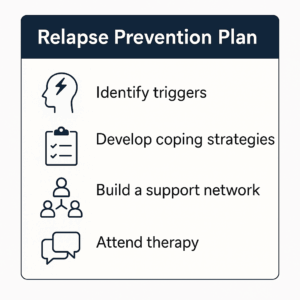
Infographic titled ‘Relapse Prevention Plan’ listing six key steps for maintaining sobriety: identify triggers, manage cravings and urges, practice mindfulness, develop coping skills, attend support groups, and seek individual therapy. The design features a clean light-blue background with dark blue text and bullet points for clarity and calm visual appeal.

Access Group Support for Relapse Prevention

Living a sober lifestyle is challenging. Still, it is crucial to remember that self-care and self-love are always foremost in maintaining security and happiness. Likewise, a relapse prevention plan depends on thriving in a supportive environment that supports recovery. Group therapy is an evidence-based therapy proven successful for maintaining sobriety for twelve-step programs. For that reason, accessing group support when recognizing dangerous triggers is a wise choice.

Support groups are available throughout the community, in treatment centers, and places of worship. Online support groups are also functional. Group support is often free of charge and offers understanding, suggestions for self-help techniques, and a safe place to voice relapse concerns. For those struggling to find the right group, contacting your therapist could be an answer.

Building a Lifeline with a Relapse Prevention Plan

Developing a relapse prevention plan is an essential step for safeguarding long-term sobriety in recovery. Addiction relapse prevention focuses on identifying substance abuse relapse triggers and crafting strategies to manage cravings and challenges. By using personalized relapse prevention plans, individuals can address their unique struggles while reinforcing healthy coping mechanisms. Whether it’s through holistic approaches, self-care in addiction recovery, or evidence-based techniques like cognitive-behavioral therapy (CBT), these measures provide invaluable tools to prevent potential setbacks.

Preventing relapse in recovery goes beyond addressing immediate challenges—it’s about creating a sustainable lifestyle that supports sobriety. Techniques such as group therapy for relapse prevention, mindfulness practices, and recovery support systems can empower individuals to recognize potential relapse signs early. These proactive methods ensure ongoing growth and resilience on the path to healing. Continue reading to discover effective relapse prevention techniques, ways to maintain sobriety, and how to create a plan tailored to your own needs for lasting success.

Be Open to Individual Therapy

Individual therapy services are not just for treatment. Be open to revisiting a therapist who may already possess insights into the situation. Cognitive-behavioral therapy can help change behaviors that may have become a problem. If it is not possible to visit a past therapist, a new therapist may see new options and have fresh material to work with.

As new therapies are developed, it is possible that holistic therapy could be the missing ingredient in your relapse prevention plan. Tweaking the relapse prevention plan with a therapist is insightful and adds to a growing self-awareness. Building trust in the recovery system may lead you to form new relationships with a mental health professional who is in sync with relapse prevention techniques.

Explore A New Relapse Prevention Strategy in Tennessee

Freeman Recovery Center, nestled in Nashville, Tennessee, offers comprehensive rehabilitation services meticulously tailored to address a wide spectrum of substance use disorders also including dual-diagnosis. Our specialized programs cater to individuals battling alcohol addiction, drug addiction, cocaine addiction, heroin addiction, meth addiction, benzo addiction, and prescription drug addiction. By combining evidence-based practices with holistic care, we deliver empathetic and professional support that focuses on the unique needs of each patient. Our goal is to create a nurturing environment where teenagers and their parents feel encouraged and empowered to overcome addiction, achieve lasting recovery, and rebuild their lives with confidence and resilience.

Self-confidence in the achievement of recovery can move forward a step further when individuals take a leap of faith and reach out when relapse potentials occur. Freeman Recovery Center in Tennessee offers compassionate and experienced therapists who can recommend new techniques to prevent relapse. Build trust in our resources, as we can recommend new groups and work out new relapse prevention tools to answer keep the enemy at arm’s length. Reach out again and receive help from a trusted partner in sobriety.

Related Addiction Treatment Articles

The Stages of Opioid Abuse

Comprehending the Phases of Opioid Consumption and Dependence

Opioid abuse often starts with valid medical prescriptions but can gradually evolve into abuse, dependency, and addiction. Identifying the phases of Opioid Use Disorder (OUD) is crucial for timely intervention. Each phase exhibits unique behavioral, physical, and psychological changes that indicate when help is necessary. Being aware of these warning signs can prevent the escalation of use and connect individuals with treatment before severe harm occurs.

The progression typically begins with initial use, frequently from prescribed medications like hydrocodoneor oxycodone, or from experimenting with illicit opioids. Some people may experience adverse side effects and discontinue use, whereas others find the effects enjoyable, leading to repeated use. Over time, tolerance develops, requiring larger doses to achieve the same effect. This stage significantly heightens the risk of misuse.

As use continues, individuals may enter the misuse and escalation phase. They might consume larger amounts than prescribed, use opioids more often, or take them for non-medical reasons such as stress relief or emotional coping. Eventually, dependence may develop, where the body adapts to the presence of the drug and withdrawal symptoms appear if use is reduced or stopped. This physical dependence sets the stage for addiction, marked by compulsive use despite adverse consequences and loss of control over drug-seeking behavior.

Certain risk factors can hasten this progression, including early exposure to opioids, a personal or family history of substance use disorders, co-occurring mental health conditions, and chronic stress or trauma. Both prescription and illicit opioids, such as heroin or fentanyl, carry significant risks. In the United States, approximately 90 people die daily from opioid overdoses, emphasizing the urgency of early recognition and intervention.

Identifying the behavioral and physical signs of misuse, such as taking larger doses than prescribed, mood swings, secretive behavior, loss of interest in daily activities, or physical symptoms like drowsiness or slowed breathing, can be life-saving. Early engagement with professional treatment options, including medical detox, therapy, and Medication-Assisted Treatment (MAT), offers a path to recovery. Understanding the stages of opioid use empowers individuals and families to take proactive steps toward safety, health, and long-term sobriety.

Comprehending the Various Categories of Opioids

Opioids function by engaging with nerve cells in the brain, spinal cord, digestive tract, and other body areas. They stimulate the release of endorphins, natural substances that alleviate pain and induce feelings of happiness. Although this makes opioids highly effective for managing pain, it also contributes to their significant risk of misuse and addiction. Understanding how various types of opioids operate and how their enjoyable effects can lead to increased usage is crucial for both preventing and treating OUD.

Medical experts and pharmacologists categorize opioids in several ways, including their origin, chemical composition, and duration of action. Healthcare practitioners consider these aspects when prescribing medications for temporary pain relief, chronic pain management, or addiction treatment. Recognizing the differences between natural, synthetic, and semi-synthetic opioids helps contextualize both their therapeutic application and their potential for abuse.

Natural Opioids

Natural opioids originate from the opium poppy plant. Examples are morphine, opium, and heroin. Morphine is often administered for moderate to severe acute pain, while long-acting formulations such as MS Contin are used for persistent pain. Although heroin is prohibited, it shares a chemical similarity with morphine and is extremely addictive.

Semi-Synthetic Opioids

Semi-synthetic opioids are altered chemical derivatives of natural opiates. Typical examples include oxycodone, hydrocodone, and hydromorphone (Dilaudid). Short-acting types are frequently prescribed for immediate pain relief, whereas extended-release forms are intended to control chronic pain. These opioids pose a significant risk of addiction when used for extended periods or without medical oversight.

Synthetic Opioids

Synthetic opioids are entirely produced in labs. Examples include fentanyl and methadone. Methadone is typically used to treat chronic pain over an extended period or as part of MAT for OUD. Fentanyl, initially created for managing severe pain in cancer patients, is 50 to 100 times stronger than morphine, making it highly effective but also highly hazardous if used improperly.

Stage 1: Building Opioid Tolerance

With repeated opioid consumption, the brain’s chemistry starts to adjust, disrupting its natural balance of endorphins and pain management. This phenomenon, called tolerance, implies that, over time, the body requires increasing doses of the drug to achieve the same degree of pain relief or euphoria.

As tolerance develops, people might unintentionally raise both the intensity and regularity of opioid intake. This increase is often the initial step toward abuse and marks the onset of a more severe progression along the opioid use disorder spectrum. Identifying tolerance early is crucial, as it indicates a heightened risk for dependency, addiction, and overdose if use continues unchecked.

Stage 2: Cultivating a Reliance on Opioids

After tolerance has developed, repeated opioid abuse can lead to physical and mental reliance. This reliance happens when the body and mind start depending on opioids to operate as usual, and consuming the drug in non-prescribed ways, referred to as abuse, often hastens this phase.

When reliance takes hold, cutting back or skipping doses can cause withdrawal effects, which are both physically and emotionally distressing. These effects often compel individuals to continue or increase opioid consumption, perpetuating the cycle of addiction and moving them closer to a full-blown OUD.

Typical withdrawal signs encompass:

  • Body aches or intense cramps

  • Shivering and perspiration

  • Queasiness, throwing up, or loose stools

  • Nervousness, irritation, and unease

  • Sleeplessness or disturbed rest

  • Strong desires or impulses to consume

  • Enlarged pupils

Stage 3: Opioid Addiction

The final phase of opioid misuse is addiction, clinically known as Opioid Use Disorder (OUD), a persistent health condition that necessitates expert treatment and assistance. The transition from tolerance to dependence eventually culminates in this phase, where control over opioid consumption, decision-making, and impulse management is significantly compromised. Medical professionals rely on these behavioral and psychological shifts as essential indicators when diagnosing OUD.

Addiction is defined by compulsive usage despite adverse outcomes. Even when individuals are aware of the detrimental effects on their health, relationships, or daily duties, they may find it difficult to reduce or discontinue use. Research shows that nearly 20% of individuals prescribed opioids for chronic painmight develop opioid use disorder, highlighting the need for awareness and early intervention.

Indicators and Manifestations of OUD

Healthcare professionals and caretakers might notice the following signs:

  • Gradually increasing the amount or frequency of opioid usage beyond what is prescribed

  • Struggling to cut down or quit using, even when wanting to or advised by a doctor

  • Consistent behavior aimed at obtaining drugs

  • Obsession with acquiring opioids

  • Growing urges for opioid medications

  • Neglect of daily duties, work, or social commitments due to opioid consumption

  • Resistance or defensiveness when family members voice concerns

  • Participation in hazardous activities without considering personal safety

  • Recognition of physical or mental health issues caused by opioids, but being unable to cease use

  • Building tolerance and experiencing withdrawal symptoms when attempting to reduce usage

Final Stage: Opioid Withdrawal

For people with OUD, trying to quit opioids suddenly, often referred to as “cold turkey,” can be hazardous and potentially life-threatening. The process of misuse, tolerance, and dependence changes brain chemistry, making medically supervised detox crucial. Most treatment plans include gradual reduction schedules or structured detox programs to safely manage opioid withdrawal symptoms while minimizing the risk of relapse or severe complications.

A medically monitored detox program offers clinical oversight, symptom management, and emotional support, which greatly enhances safety and comfort during the withdrawal process. Detox is usually the initial step in a comprehensive rehabilitation program, which integrates medical care with therapy, counseling, and relapse prevention strategies to support long-term recovery.

Frequent Symptoms of Opioid Withdrawal

Withdrawal symptoms can impact both the body and mind and may involve:

  • Runny nose, watery eyes, sniffles, and frequent yawning

  • Restlessness, anxiety, irritability, and mood fluctuations

  • Increased sensitivity to pain or worsening chronic discomfort

  • Perspiration, chills, goosebumps, and shivering

  • Abdominal cramps, nausea, vomiting, or diarrhea

  • Muscle soreness, cramps, and tremors

  • Fast heartbeat, varying blood pressure

  • Sleep disruptions or insomnia

  • Suicidal ideation or intense emotional distress

Receive the Support You Deserve for Opioid Use Disorder at Freeman Recovery

Opioid consumption often starts with a valid treatment for chronic pain, but unintentionally, it can lead to OUD. At Freeman Recovery Center, we comprehend how daunting it can be to confront addiction while worrying about recurring pain. Our admissions team is skilled in assisting individuals and families through this difficult transition with empathy and professionalism.

We offer comprehensive, personalized rehabilitation programs designed to address various substance use disorders, including opioid addiction, alcohol dependency, cocaine use, heroin use, methamphetamine use, benzodiazepine use, and prescription drug misuse. Many of our programs also include dual diagnosis treatment, addressing co-existing mental health conditions alongside addiction to encourage lasting recovery.

Our approach merges evidence-based therapies with holistic care, offering individual counseling, group therapy, family support, and medical detox when necessary. Each plan is customized to the patient’s unique needs, ensuring a compassionate and organized path to recovery. We prioritize fostering a nurturing environment in which both adolescents and adults feel empowered to rebuild their lives with confidence and resilience.

At Freeman Recovery Center, we concentrate on more than just ending substance use; we strive to restore hope, teach coping skills, and enhance overall wellness. Our programs help patients regain control, reconnect with loved ones, and establish the foundation for a sober, fulfilling life.

Contact us today to speak with our admissions team, learn about our detox programs, and take the first step toward a healthier, addiction-free future.

Related Addiction Treatment Articles


What is the Johnson Model Intervention Method?

A Compassionate Strategy for Addiction Intervention Method

The Johnson Intervention Method stands out as a powerful and empathetic approach for addressing substance use disorders. Rooted in the teachings of Vernon Johnson, this method centers on proactive involvement from family and friends to guide an individual toward treatment. Unlike waiting for someone to hit “rock bottom,” the Johnson model intervention uses loving but firm confrontation to illuminate the reality of addiction and its impact. By leveraging the strength of family intervention for addiction, this strategy fosters accountability and opens the door to meaningful recovery.

With its focus on compassion, structured planning, and clear goals, the Johnson Intervention Method has proven to be one of the most effective substance abuse intervention models. By understanding the steps in the Johnson Intervention process and the critical role family members play, loved ones can create a supportive environment that motivates change. Continue reading to explore the history, principles, and effectiveness of the Johnson Intervention approach, and discover how it can facilitate healing for families and individuals alike.

The Johnson Intervention Method began as a brainstorm by Dr. Johnson, but studying 200 people in recovery and their circumstances helped reinforce his beliefs. Most study participants sought treatment after a crisis, illness, addiction, or life-altering event involving relationships.

During these sessions, friends, family, co-workers, or loved ones would confront the person about the impact of their behavior. They also present boundaries or consequences if the confronted person doesn’t change. It helps someone become aware of their harmful behaviors and account for them.

Understanding the Johnson Method For Addiction

The Johnson Method is helpful to encourage sobriety and accountability in treatment. Understanding the Johnson Intervention Method is helpful through the words of Vernon Johnson himself:

“It is a myth that alcoholics have some spontaneous insight and then seek treatment. Victims of this disease do not submit to treatment out of spontaneous insight – typically, in our experience they come to their recognition scenes through a buildup of crises that crash through their almost impenetrable defense systems. They are forced to seek help; and when they don’t, they perish miserably.”  – Vernon Johnson, I’ll Quit Tomorrow, 1973.

Sadly, 71,000 people died in 2019 from a drug overdose. In addition, the National Institute on Drug Abuse (NIDA) states in 2020, 20 million people were diagnosed with a substance use disorder. Not only is that alarming, but only 10.3% of those people received substance use disorder treatment.

Those numbers rose as SAMHSA reported in 2017 that 18.7 million people were affected, with 7.6% receiving treatment. The constant remains the proven treatment methodologies continue to be relied upon for successful treatment. This includes the Johnson Intervention Method. In fact, many believe the Johnson Method is a popular intervention method for those with alcohol and drug addictions.

We all have stereotypical thoughts concerning substance use treatment, with interventions initiated by family and friends. The Johnson Intervention Method is similar and relies upon an invitation to the network of possible support people to attend counseling sessions.

Essential support tools are detailed, a review of how an intervention works, then a plan is put into action for the last counseling session. Finally, a counseling session (intervention) includes the support system, the loved one with a substance use disorder, and a therapist. Connecting the loved one with a substance use disorder to a treatment option in a confrontational setting aims to achieve a safe and powerful resolution.

Dr. Vernon Johnson, a priest with an alcohol use disorder developed The Johnson Intervention Method in the 1960s. In addition, he used self-reflection on his personal experience with treatment to determine a safer option. He concluded there did not have to be an experience of “rock bottom” and that family and friends could lead a loved one to treatment.

The 7 Components of the Johnson Intervention Method

  • Team: An intervention team includes the professional interventionist, family, friends, or other loved ones.
  • Plan: A carefully outlined plan provides the role of each participating person, the time, and the place.
  • Focus is care: The intervention focuses on the well-being or care of the loved one, not blame.
  • Focus on substance use only: The main focus is substance use issues only.
  • Evidence: Verbalizing details of the proof and how substance use has impacted the lives of the family and loved ones.
  • The goal: The primary goal of the intervention is treatment.
  • Options of treatment: Having more than one treatment option is ideal for the loved one to feel like there is some control.

The Johnson Intervention’s Method Benefits

The Johnson Intervention Method has proven to be one of the most effective methods of connecting someone with a substance use disorder to treatment. In addition, the benefits of this therapeutic technique lie in proof that outpatient treatment and other variations of treatment Dr. Johnson’s method led to a substantial increase in usage.

The Johnson Intervention Method, compared to 4 different modes, proved his clients were more likely to attend and complete treatment. As a result, the other 4 methods had some success, but engagement with the family and loved ones of the client seems to be the most successful option.

Why Interventions Are Useful for Addiction

Conversely, the benefit extends even further for using the Johnson Intervention Method, as some people believe that the user must reach rock bottom before they reach out for help. Guiding a loved one to treatment using this method prevents rock-bottom situations and brings therapy to end the addiction before the worst-case scenario.

Often referred to as an answer to denial, proof of the crisis the loved one is experiencing in addiction can allow acknowledgment of their reality. Finally, success in avoiding a life-threatening situation in addiction is the first win in accepting treatment.

The Johnson Intervention Method is a nonjudgmental, caring, loving, and compassionate method of offering treatment to a loved one. An essential component is the team’s objectivity in spelling out their loved one’s reality. Those experiencing a substance use disorder have many defenses to accept the treatment offer. It shows how much the team cares, and their concerns are spoken without hate.

Finding Support with a Trusted Drug and Alcohol Addiction Interventionist

If you’re seeking compassionate and proven help for a loved one struggling with addiction, the Johnson Intervention Method offers a way forward. Guided by experienced drug and alcohol addiction interventionists in Tennessee and Nashville, this approach focuses on addressing substance use disorders with empathy and clear direction. By engaging family and friends as a critical support network, the method empowers individuals to recognize the need for help and take the first steps toward recovery.

Partnering with a professional drug and alcohol addiction interventionist in Tennessee or Nashville ensures that the process is handled with care and expertise. With the right guidance, you can foster understanding, set clear goals, and connect your loved one to the treatment they need for lasting change. Take this opportunity to explore intervention options and start the path to healing for your family today.

Johnson Intervention Method in Tennessee with Freeman Recovery Center

Freeman Recovery Center offers the Johnson Intervention Method for alcohol use disorder treatment. We also have drug rehab and dual diagnosis treatment to choose from. Visit our website to answer more questions, and message us through our Contact Us page. Once the detox is complete, outpatient or inpatient treatment can follow. Intervention may be just the answer for bringing your loved one with an addiction to seek treatment.

Freeman Recovery Center in Nashville, Tennessee, specializes in treating alcohol use disorder with a comprehensive and compassionate approach. Our alcohol rehab program is designed to address the complexities of alcoholism through a combination of evidence-based therapies and personalized care plans. By integrating expert testimonials, we showcase our proven track record in helping individuals achieve lasting sobriety. Our dedicated team of professionals employs a variety of treatment modalities, including individual counseling, group therapy, and medical detoxification, to ensure each patient receives holistic care tailored to their unique needs. At Freeman Recovery Center, we’re committed to guiding you on your journey to recovery, restoring hope, and empowering you to reclaim your life.

Contact our staff to begin the process today.

Related Addiction Treatment Articles

What Is the Role of Case Management in Addiction Treatment Centers?

Addiction treatment centers offer various services, but not all centers provide case management in addiction treatment for their patients. For example, if a patient must receive care from multiple facilities, a manager can coordinate the treatment plan to link all facilities.

Someone deciding whether they need a case manager to coordinate all the treatment services that cover an individual’s needs can depend on the complexity of the treatment plan. Lastly, the case manager’s role in addiction treatment is to ensure the patient receives medical, behavioral health, and addiction treatment services in harmony to meet the patient’s goals.

What Is Case Management?

Case management in addiction treatment coordinates an individualized approach to achieving the patient’s treatment goals through a manager. A case manager evaluates the treatment plan, and facilitates the services needed to ensure all therapies are complete. Another factor is determining the best facility for the patient to receive the care.

Medical care, behavioral health therapies, and aftercare programs process through the manager. Finally, case management is proving extremely effective on a large-scale basis. Addiction treatment centers only sometimes utilize case management opportunities.

Federally qualified health centers (FQHC), veteran’s programs, community health centers, and specialty addiction treatment centers recommend case management in addiction treatment. SAMHSA states through one of their studies “the percentage of treatment programs using case management has risen since 2000 from 66% of the 13,418 facilities then in operation to 83% of the 15,961 facilities operating in 2019.”

role of case managers in addiction treatment.

What Is the Role of Case Management in Addiction Treatment?

The role of case management in addiction treatment is to coordinate and oversee every step of a person’s recovery journey, beginning with the initial screening and assessment and continuing through aftercare. A substance abuse case manager evaluates the patient’s medical, behavioral, and substance use history to build a cohesive plan that supports lasting recovery. They also help match treatment services with facilities that meet the patient’s financial and therapeutic needs.

An example of case management in addiction treatment might involve a patient who begins detox at one facility, continues therapy at another, and later transitions into outpatient care. The case manager ensures all services are properly connected so there are no gaps in care. This structured coordination helps maintain consistency, reduce stress, and increase the likelihood of long-term sobriety.

When looking at what case management in mental health and addiction treatment involves, it’s clear that case managers act as both advocates and guides. They communicate with treatment providers, manage appointments, and monitor the patient’s progress to make sure each part of the plan works together. By understanding a patient’s history, family dynamics, and personal goals, case managers help individuals in recovery stay supported and motivated throughout the healing process.

The Vital Role of Substance Abuse Case Managers

Substance Abuse case managers are at the heart of effective recovery support, offering personalized guidance and compassionate care to individuals overcoming addiction challenges. These professionals take on a multifaceted role, ensuring that every aspect of treatment – from medical care to behavioral therapies and aftercare – is meticulously coordinated. By fostering a sense of stability and understanding, case managers provide a lifeline for those navigating the complexities of addiction recovery, empowering them to make meaningful progress toward lasting change.

Through addiction recovery case management services, case managers become advocates for their clients, tailoring treatment plans to address unique needs. They connect individuals with essential programs, manage schedules, and provide ongoing encouragement, helping to ease the burden of recovery. Rehab case managers also serve as a vital bridge between patients, families, and treatment providers, promoting communication and a unified approach to care. Continue reading to understand how these professionals bring clarity and hope to the recovery process, and how their support can make all the difference in achieving sobriety.

What Does A Case Manager Do?

Case managers begin their efforts before treatment begins for a patient. They coordinate the process by guiding patients through the admissions process, assessments, and initial setup of the treatment plan. In each case, the needs are different with case management in addiction treatment.

It can be a security source for patients, their families, and the treatment team to receive communications and appointment schedules understanding and compassionately. Throughout the treatment process, the addiction case manager coordinates continuing care needs. In aftercare, the manager can facilitate sober living arrangements as a knowledgeable case manager is familiar with an endless list of resources.

Case management in addiction treatment is an invaluable source of relief for families who want to know about milestones, accomplishments, and the continual progress of recovery. Therefore, case managers are a source of peace for everyone involved with the patient receiving addiction treatment services.

Why Patients Use Case Management During Addiction Treatment

Because many patients in an addiction treatment facility have co-occurring mental health disorders and physical conditions that need additional treatment, increasing numbers of people are incorporating case managers to coordinate care.

How common are these dilemmas occurring? In 2019 SAMHSA reported that with 9.5 million adults with a substance use disorder, 3.6 million had a mental health disorder. Comorbid physical illnesses are heart disease, hepatitis, and HIV/AIDS are the most common, according to the National Institute on Drug Abuse in 2020.

Case management in addiction treatment works to achieve a better chance of successful recovery, continued sobriety, and a source of support throughout future endeavors for the patient. With various needs to coordinate, including medication regimens, case managers have experience with the big picture of addiction treatment and re-establishing the patient’s well-being.

Benefits of Using Case Management During Addiction Treatment

The following benefits of case management may identify issues most people need to think of during the initial stages of seeking treatment:

  • Identifying the needs of those seeking recovery: There is no one size fits all recovery process. Each treatment plan is an individual journey. Addiction case managers learn about the patient first, identify their individual needs, then apply their expertise to address needs with available services.
  • Brings new lifestyle tools and support to patients: Those in recovery have goals of living a sober lifestyle healthily and positively moving forward from treatment. Case managers familiar with the patient’s needs gauge what tools and skills to concentrate on for each patient.
  • Case managers coordinate care for all needs: As mentioned before, substance use disorders are only one point of care in treatment. Mental and physical treatments are a big part of the overall treatment plan for total success in recovery. Case managers can coordinate appointments, therapies, and medication management when needed.
  • Bringing valuable experience to the table: Case managers work with those in addiction treatment with many needs. The ability to support and encourage using compassion and understanding helps avoid common obstacles in recovery. Above all, most case managers use an as-needed approach, slowly withdrawing the level of support, and the patient gains strength and self-confidence.

Discover How Case Managers Help Individuals in Recovery at FRC

Freeman Recovery Center offers a comprehensive range of addiction treatment programs, including luxury rehab, inpatient residential care, outpatient services, detox programs, and individualized therapy options. Each treatment plan is designed around the patient’s unique needs, with a focus on evidence-based practices and holistic healing. Our Tennessee facilities provide a safe and supportive environment where clients can rebuild their lives with confidence and dignity.

At Freeman Recovery Center, a dedicated substance abuse case manager plays a vital role in helping clients navigate each step of the recovery process. From coordinating medical and behavioral health services to managing aftercare and community resources, our case managers ensure that all aspects of treatment work together seamlessly. This hands-on approach exemplifies an effective example of case management in addiction recovery, offering structure, clarity, and ongoing support for every individual.

If you’ve been wondering what case management in mental health and addiction treatment truly involves, or how it can make recovery more manageable, our team is here to help. Case managers help individuals in recovery by advocating for their needs, organizing treatment plans, and guiding them toward long-term sobriety.

If you or a loved one is feeling overwhelmed about where to begin, reach out to Freeman Recovery Center in Tennessee. Our compassionate case management team is ready to connect you with the care and guidance you need for lasting recovery. Call us today to start your journey toward healing.

Related Addiction Treatment Articles

What Does Dual Diagnosis Treatment Include?

Exploring the Key Elements of Dual Diagnosis Treatment

Dual diagnosis treatment offers a lifeline for individuals facing the complex challenges of co-occurring mental health and substance use disorders. This specialized approach integrates evidence-based therapies and holistic care to address both conditions simultaneously, delivering a tailored path to recovery. Through dual diagnosis rehab programs, patients benefit from comprehensive dual diagnosis care that treats mental illness and addiction together, ensuring no aspect of their struggle is overlooked. From cognitive-behavioral therapy for co-occurring disorders to family involvement and group therapy, these programs provide a well-rounded support system.

The foundation of dual diagnosis therapy lies in its flexibility and inclusivity. Treatment plans often include medication management, individualized counseling, and aftercare planning to foster stability and long-term recovery. These co-occurring disorder treatments are designed not only to alleviate immediate symptoms but also to empower individuals to regain control over their lives. Continue reading to discover the essential therapies and approaches included in dual diagnosis treatment and how they support meaningful, lasting change.

Those diagnosed with mental health and substance use disorder may be interested in dual diagnosis treatment. It is not uncommon for those with a substance use disorder to also be experiencing a co-occurring mental health disorder. Therefore, finding a treatment center that offers evidence-based therapies for both diagnoses must be a significant priority. Those seeking treatment must consult a medical or mental health professional for a correct diagnosis.

Treatment centers offer the most up-to-date therapies for both conditions in one comprehensive plan. Some centers concentrate only on substance use disorders. Dual-diagnosis treatment experts realize substance use disorders can stem from mental health issues. Thus, evidence-based therapies will complement each other.

What Is Dual Diagnosis?

Dual diagnosis concludes the diagnosed person has both a substance use disorder and a co-occurring mental health condition at the same time. For example, this can include someone who abuses alcohol and has depression. Symptoms of both disorders could be confused, and it can also be challenging to determine which disorder came first.
However, more than 50%  of those with a significant mental health disorder are also diagnosed with a substance use disorder. Therefore, finding dual diagnosis treatment is imperative to treat the whole person and both disorders. The most common dual diagnoses include substance use and anxiety or mood disorders.

However, more than half with a substance use disorder suffer from an emotional, psychological, or psychiatric condition. Dual diagnosis treatment provides experienced mental health professionals who understand how the 2 disorders are linked. On the other hand, ADD, ADHD, schizophrenia, and some personality disorders cannot be excluded.

Mood and anxiety disorders often co-occur with a substance use disorder. Someone can abuse drugs or alcohol while experiencing any of the following:

  • Bipolar disorder
  • Major depressive disorder
  • Dysthymia disorder
  • Generalized anxiety disorder
  • Obsessive Compulsive Disorder
  • Social anxiety disorder
  • Post-traumatic stress disorder

The Dual Diagnosis Process and Timelines

An assessment or evaluation from a medical or mental health provider will provide a diagnosis for dual diagnosis treatment. The assessment will include a wide range of screening tools a healthcare provider uses. However, it is helpful for the patient to be honest during the evaluation to have all pertinent data in forming the diagnoses. Unfortunately, a 2002 study found that only 12% of the 4 million dual-diagnosis adults received treatment for both conditions.

Medical professionals must make a thorough assessment for a substance use disorder because alcohol, drugs, and other substances can change brain chemistry and function. Conversely, those experiencing an undiagnosed mental health disorder may begin using drugs or alcohol to self-medicate.

Mental health disorders have affected the brain’s reward center, increasing the probability of addiction. It is difficult to establish which diagnosis came first, but dual diagnosis treatment offers the best chance for recovery.

After completing an assessment and confirming the diagnosis, the dual diagnosis treatment timeline includes several processes. Once the admissions process is complete, the results from the review allow for a comprehensive treatment plan. However, detox must occur before further treatment can begin. The decision for inpatient or outpatient treatment after detox determines the length of the program.

Who Is A Dual Diagnosis Treatment For?

Dual diagnosis treatment is for people with a substance use disorder and a co-occurring mental health disorder. Unfortunately, establishing treatment for only one disorder almost always meant that the second condition was often left untreated. Therefore, 2 or more diagnoses are the qualifiers for dual diagnosis treatment. Quite often, depression, anxiety disorder, and substance use disorder all exist together.

What Are the Benefits Of Dual Diagnosis Treatment?

Studies have proven that dual diagnosis treatment is most successful when both conditions treat simultaneously, as one condition feeds off the other. In addition, the separate issues often feed off one another, making it essential to address both for success. Consequently, each type of therapy for both diagnoses supports the other for a successful long-term recovery and prevention of relapse.

Signs and Symptoms of A Dual Diagnosis Disorder

Drug tests offer a definitive answer concerning the type of substances with a substance use disorder; determining what mental health disorder is involved is more challenging. However, signs and symptoms can be shared with many mental health disorders, so screening tools are available for mental health professionals to diagnose. Finally, with dual diagnosis treatment, the symptoms of both conditions can be similar.

The signs and symptoms of a mental health condition could include any of the following:

  • Mood swings
  • Confusion
  • Depression
  • Difficulty concentrating
  • Withdrawal from relationships
  • Suicidal thoughts

The symptoms of drug or alcohol abuse could include any of the following:

  • Risky behavior
  • Isolation from friends and family
  • Changes in behavior
  • High tolerance for the substance
  • Withdrawal symptoms
  • Continually using the substance despite the dangers
  • Feelings of needing to be on the substance to function normally

Effects of Undiagnosed Dual Diagnosis

When a dual diagnosis is not correctly identified, the patient can suffer substantial physical and mental consequences. For example, those who have substance use disorder and depression have a much higher risk of developing suicidal thoughts and overdose. On the other hand, an untreated mental health disorder can lead to unemployment, disability, homelessness, poor quality of life, and even incarceration. Many social problems begin with mental health disorders left untreated.

Both substance use disorder and mental health conditions left untreated can negatively affect relationships with friends, families and coworkers. Physical health can be adversely affected due to a lack of self-care and the ability to recognize the seriousness of symptoms. Escalation of either condition could have very dire results. Therefore, dual diagnosis treatment is essential for seeking help in recovery.

Explore the Importance of Treating Dual Diagnosis in Tennessee

Freeman Recovery Center, nestled in Nashville, Tennessee, offers comprehensive rehabilitation services meticulously tailored to address a wide spectrum of substance use disorders. Our specialized programs cater to individuals battling opioid addiction, alcohol addiction, drug addiction, cocaine addiction, heroin addiction, meth addiction, benzo addiction, and prescription drug addiction. By combining evidence-based practices with holistic care, we deliver empathetic and professional support that focuses on the unique needs of each patient. Our goal is to create a nurturing environment where teenagers and their parents feel encouraged and empowered to overcome addiction, achieve lasting recovery, and rebuild their lives with confidence and resilience to start a sober life.

If you are experiencing a substance use disorder and are seeking treatment, our experts can help determine if you have a dual diagnosis. Freeman Recovery Center in Tennessee offers a comprehensive treatment plan and a compassionate staff who understand the difficulties 2 diagnoses can present. Visit our website and see the beautiful location of our center. While you are gathering more information, fill out an inquiry form to allow us to contact you for answers to your questions.

Call today.

Related Addiction Treatment Articles

What Is Medically-Monitored Detox?

The Importance of Medically Monitored Detox for Recovery

Medically monitored detox is a vital first step in achieving lasting sobriety, offering individuals a safe and structured way to begin their recovery. Supervised detox programs provide medical detoxification under the careful oversight of trained professionals, ensuring that withdrawal symptoms are managed effectively and comfortably. With a focus on both physical and emotional well-being, these programs prioritize safety through a clinical detox process designed to reduce risks and promote success. Whether it’s alcohol detox under medical supervision or detoxing from other substances, these services set the foundation for comprehensive treatment.

By integrating medically assisted detox with personalized protocols, these programs support individuals at every step, from managing withdrawal symptoms to preparing for the next phase of recovery. The combination of professional detox care and inpatient detox programs creates an environment where patients feel supported and empowered to take control of their health. Continue reading to explore how medical detox services prioritize safety and guide individuals toward a healthier, substance-free future.

It is a fact that a medically-monitored detox program can be the safest and most comfortable form of detox program. In addition, medically-monitored detox offers the option of medication to lessen the intensity of withdrawal symptoms.

However, detox can be a deal breaker and cause relapse, so making the client comfortable is vital. Finally, only some treatment centers offer this option, so ask what your center option uses.

What Is Medically-Monitored Detox?

Substance use disorders create chemical changes in the body and mind. In removing the substance, the brain must readjust to the chemical changes and the levels of neurotransmitters. In addition, the body is going through challenges without the substance. Consequently, the medically-monitored detox program provides medical supervision around the clock during detox.

Someone must monitor dangerous withdrawal symptoms to keep the client safe and comfortable. Likewise, withdrawal symptoms can vary from person to person, so having a doctor present with a medically-monitored detox can be lifesaving.

However, factors such as patient age, health, and the number of substances used can affect the severity of withdrawal symptoms. Finally, the history of previous detox experiences might influence expected outcomes.

Symptoms may include any of the following symptoms:

  • Digestive issues
  • Anxiety
  • Rapid heart rate
  • Excessive sweating
  • Depression
  • Tremors
  • Confusion
  • Stroke

Medically-monitored detox assures patients the best safety, health, and future sobriety support. However, withdrawal symptoms gradually develop hours after the user’s last dosage. Therefore, peak discomfort and intensity usually occur 3 or 4 days into detox. Finally, the detox process can be as brief as 5 days or longer, depending on several factors.

What Does the Detox Process Include?

Licensed medical professionals supervise a medically-monitored detox program and have the ability to prescribe medications to assist with uncomfortable symptoms. Once the detox begins, the patient no longer has access to the substance involved with the addiction.

Instead, the supervising physician can reference the substance being detoxed from and decide the best options for medication, which fall into 2 opioid categories. Psychological benefits of medically-monitored detox programs include early intervention techniques to carry on with the treatment program after detox.

Markedly, those who are introduced to recovery techniques early on in detox have less chance of relapsing. Consequently, learning positive coping mechanisms and breathing techniques help to gain self-confidence early on and can help immediately after detox. Finally, those experiencing the detox can begin recognizing the truth in the mind-body connection.

Medication-Assisted Treatment with Partial Agonists and Antagonist Opioids

Partial agonists produce similar drug effects in the body, although less intense. However, when the body stops responding to the partial agonist, usage is ended. Buprenorphine is commonly used. In addition, antagonists block opioids through attachment to opioid receptors in the brain but don’t activate them. Finally, medical personnel frequently administers Naloxone.

Clinical treatment staff works harmoniously with medical professionals to address the processing of challenging emotions and feelings that can occur with detox. In addition, medical staff monitors blood pressure, respiration, and other vital body processes throughout detox. As a result, completion of a medically-monitored detox delivers the client to their treatment program to begin therapy. In conclusion, the patient is free from their substance and can progress in sobriety.

Medically-Monitored Detox Can Address Detox Fears

Those who seek treatment have overwhelming fears of what will transpire during detox. Medically-monitored detox provides professional therapists and treatment staff who can address the fear of withdrawing from their substance.

On the other hand, before the detox begins, an educational session can handle the process safely and compassionately. Above all, patients are always supervised during detox; everyone managing the detox is trained to help process emotions and feelings in intense moments.

The following fears are most common during detox and immediately after:

  • Fear of the withdrawal, mental and physical symptoms, and pain
  • Fears of what happens after detox or what steps will occur in treatment after detox
  • Fear of the unknown, when the entire world is changing, is challenging to be fearless

The Pros and Cons of Inpatient Detox

The advantages of attending a medically-monitored detox with an inpatient treatment program begin with constant medical and mental care. In addition, inpatient treatment facilities have quick accessibility to handle severe complications. As a result, relapse prevention is much better.

Altogether, the most significant advantage is there is no chance of accessing drugs or alcohol while in an inpatient facility, and the success rate is higher with inpatient detox programs. One disadvantage of detoxing in an inpatient program is the higher cost. However, outpatient detox can cost less and still offer medically-monitored detox.

In either case, detox is imperative as long as it is safely monitored. Another disadvantage of some inpatient treatment centers is that patients may be separated from their personal items. In other words, some centers want the clients to depend on the staff for their needs.

What Happens After Detox?

Detox is the beginning step to finding sobriety and establishing a new healthy lifestyle. Freeman Recovery Center offers a variety of therapy options that can begin immediately after detox. First, clients can learn how to live sober.

Subsequently, individual therapy is essential for learning about behavioral patterns, thought processes, and situations that led the individual into addiction. And finally, group therapy builds bonds and a support system for sharing everyday experiences and successes in recovery.

Find Medical Detox at Freeman Recovery

If you’re ready to take the first step toward healing, our medically monitored detox options can provide the safety, comfort, and support you need. And if you’re seeking help for a loved one, we invite you to explore the evidence-based therapies and treatment pathways available at Freeman Recovery Center.

We proudly offer a comprehensive selection of thoughtfully designed programs, including detox services, inpatient residential care, outpatient treatment, luxury rehab options, and a variety of therapeutic modalities. Every service is tailored to meet each client’s unique needs, grounded in evidence-based practices and a whole-person approach. Our Tennessee facilities provide a calm and supportive environment where individuals can begin their recovery journey with dignity, confidence, and compassion. We are committed to guiding both adults and teens toward meaningful, lasting wellness.

Our admissions team is here to walk you through every step from answering questions to reviewing financial details and verifying insurance coverage. Reach out through our secure portal and begin your path to recovery with the assurance of medically monitored detox and professional care you can trust.

Related Addiction Treatment Articles

A Warm Welcome at Freeman Recovery Center
Comprehensive & Accredited Rehab

We provide compassionate, credentialed rehab services across Nashville, Dickson, and nearby communities.

Tailored Levels of Care

Our Tennessee facilities offer medical detox, residential care, and flexible outpatient programs tailored to each person’s needs.

Personalized, Supportive Treatment

Every treatment plan integrates evidence-based therapy, holistic support, and family involvement. We verify insurance and streamline admissions to help clients begin recovery quickly and confidently.

Real Patient Reviews

Read stories from real people who found hope and healing at Freeman Recovery Center.