
Early Stages and Warning Signs of Meth Abuse
Recognizing the Early Stages of Meth Abuse
The early signs of meth abuse often go unnoticed, yet identifying them can mean the difference between early intervention and a prolonged struggle with addiction. Methamphetamine is a powerful stimulant that quickly rewires the brain’s chemistry, leading to changes in mood, behavior, and physical appearance. From increased energy and euphoria to alarming physical symptoms like sores and tremors, the early stages of methamphetamine abuse reveal patterns that cannot be ignored. Understanding these initial indicators of meth addiction is a critical step in preventing further harm and addressing the issue with compassion and urgency.
Behavioral shifts, psychological distress, and physical warning signs are just a few of the red flags that can surface during the early stages of meth abuse. Recognizing methamphetamine’s effects early can pave the way for life-saving interventions and treatment options. Continue reading to explore a comprehensive guide to methamphetamine addiction symptoms, early appearance of dependency indicators, and actionable strategies for obtaining help before it’s too late.
Recognizing the early stages of meth abuse in someone close may be the key to saving their life. Drug addiction, specifically methamphetamine addiction, is 1 of the most hazardous substance use disorders because of the caustic chemical components and how they harshly affect the user.
A powerful stimulant substance, meth is highly addictive and interacts with chemicals in the brain, serotonin, and dopamine. This produces a euphoric rush. The danger lies in the user wanting to maintain a high level of euphoria through continual use with close frequency.
Dangers of Meth Abuse
Methamphetamine will adversely affect multiple body systems, which makes hiding the substance use disorder difficult. In the early stages of meth abuse, the drug plays havoc with the happy chemicals in the brain, serotonin and dopamine, which control mood, feelings of pleasure, sleep, appetite, memory, and motor system function.
Furthermore, the effects can last for up to 12 hours but cause intense cravings for more immediately after the crash. Addiction results because the user will develop a binge and crash pattern to maintain the desired level of euphoria.
Cravings for meth are known to be stronger than those for cocaine or heroin. According to the National Institute on Drug Abuse (NIDA),it is typical for a user to go on a run when continual drug ingestion takes place for a long time. The user either runs out of the drug or an overdose.
Tolerance for meth builds quickly, and finding pleasure anywhere else but the drug creates a cycle of abuse. Understanding the early stages of meth abuse may help identify problems with a user’s teeth, open skin sores, and constant scratching of skin. Stopping the cycle of abuse as soon as it is recognized is vital for limiting irreversible health problems and mental trauma.
Dangerous consequences of meth abuse include the following:
- Tooth loss
- Organ failure
- Cardiovascular problems
- Permanent memory loss
- An inability to understand abstract thoughts
- Uncontrollable mood swings with aggressive outbursts
- Contracting HIV or Hepatitis C
Although methamphetamine prescriptions for managing attention deficit hyperactivity disorder symptoms and sleep disorders are safe, meth found on the street is hazardous. It’s no wonder the early signs of meth abuse are behavioral, physical, and mental when considering the compounds found in street meth. Caustic chemical components in street meth that can be extremely dangerous in human consumption.
The following substances could be in street methamphetamine:
- Battery acid or lighter fluid
- Ammonia or ether
- Drain cleaner and paint thinner
- Rubbing alcohol
- Engine cleaner
Behavioral Signs and Symptoms of Early Meth Abuse
The early signs of meth abuse may be significant and easy to identify, but many family and friends fear addressing their concerns. Depending upon how meth is ingested, various signs and symptoms will align.
Meth can be snorted, injected, eaten, or smoked, with users leaving behind small bags with white powder, pieces of foil, and syringes as signs of meth use. It can be beneficial to seek professional help to understand the most effective method of addressing the problem.
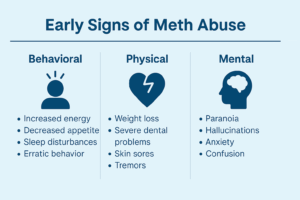
Common behavioral symptoms to look for in the early signs of meth abuse include the following:
- Unusual increase in energy, euphoria, and excitement for abnormal periods
- Changes in eating and sleeping habits, including insomnia and weight loss
- Increased moments of nervousness, restlessness, and being jittery
- Signs of what may be symptoms of an eating disorder
- Disruptions or problems with lifestyle, work, family, and other relationships
Physical Signs and Symptoms of Early Meth Abuse
The early signs of meth abuse that show physically can sometimes be alarming when initially seen. The physical effects of meth on the body are apparent. Some people experiencing meth abuse feel like bugs are crawling underneath their skin, and they continually scratch themselves. An overall change in appearance will occur quickly and prove an apparent change in physical health.
Common physical symptoms revealing the early signs of meth abuse include the following:
- Involuntary tics or twitchy movements
- Continual scratching of the skin
- Sores and open wounds, some may look infected, on the face, arms, and legs
- Jaw clenching
- Elevated body temperature and heavy sweating
- Headaches and nosebleeds
- Dilated pupils, sunken eyes
- Nausea, vomiting or diarrhea
- Tremors
- Bad breath or dry mouth known as meth mouth
- Severe dental issues
- Burn marks on lips or fingers
- Lung infections
- Difficulty swallowing
Mental Signs and Symptoms of Early Meth Abuse
Mood instability stems from the connection between the drug and how it affects brain chemistry. The early signs of meth abuse involving the mental capacity of those with a meth use disorder come in unusual forms linked to meth addiction.
It may seem like a loved one may have developed a new personality overnight. Family and friends surrounding someone showing the early signs of meth abuse need to investigate immediately and take action to seek treatment.
Common mental symptoms revealing the early signs of meth abuse include the following:
- Extreme paranoia
- Hallucinations and delusions
- Intense mood swings and increased impulsivity
- Increasing secrecy
- Increased moments of aggression
- Chronic depression
- Anxiety
- Memory problems
- Psychosis
Why Detox Matters
For those who recognize the early signs of meth abuse and decide to seek treatment, detox is the next step. Safe detox from methamphetamine is possible in a professional treatment center with medical monitoring. Psychosis and depression are symptoms of withdrawal from meth, so detoxification with the possibility of medication-assisted treatment is the best plan.
Detoxing at home without professional guidance can be dangerous and lead to relapse. Medical, emotional, and psychological support is essential for detoxification from meth. Many people experience co-occurring mental health conditions that require treatment, as well.
Treatment options following professional detox are beneficial to begin immediately to prevent relapse. Therapy can help to learn new coping mechanisms, positive thinking, and behavior modification techniques to continue living a sober lifestyle.
Get Detox for Early Stages of Meth Abuse in Tennessee
Finding the ideal treatment center to address the needs of someone in the early stages of meth abuse in Tennessee may initially seem challenging. Freeman Recovery Center in Tennessee offers medically monitored detox and various treatment options following detox for methamphetamine abuse. The professional and experienced staff understand those with a substance use disorder and show compassion and kindness through the recovery journey.
We offer comprehensive rehabilitation services meticulously tailored to address a wide spectrum of substance use disorders. Our specialized programs cater to individuals battling alcohol addiction, drug addiction, cocaine addiction, heroin addiction, opioid addiction, meth addiction, benzo addiction, and prescription drug addiction. By combining evidence-based practices with holistic care, we deliver empathetic and professional support that focuses on the unique needs of each patient. Our goal is to create a nurturing environment where teenagers and their parents feel encouraged and empowered to overcome addiction, achieve lasting recovery, and rebuild their lives with confidence and resilience pushing towards a sober life.
Contact us today for more information on the treatments we offer.

