Most people think of hard times when someone says they have hit rock bottom. However, addiction can be the most challenging time of anyone’s life. In treatment terms, the addict has a moment of clarity when the realization happens that the consequences of the addiction outweigh the benefits. In these moments, the person with a substance use disorder ends their denial, stops blaming everyone, and asks for help.
The term “rock bottom” is a term that Alcoholics Anonymous coined as the necessary motivation to seek help for addiction. Much like the stigma that surrounds mental health, at one time, physicians believed addiction was a moral failure instead of a disease. Currently, it is understood that thinking you must hit rock bottom before starting addiction treatment is a myth.
What is Rock Bottom?
A place of heartache, pain, and desperation for those who hit rock bottom in addiction and have reached their breaking point; it can’t get worse. In many situations, rock bottom is reached after a significant event. Whether it is a DUI, losing a job, or losing everything tangible in their world, they must get help. Often rock bottom is the turning point for detox and treatment to begin.
With most people experiencing a substance use disorder, there are warning signs that rock bottom is about to occur. Educated treatment professionals can assess or evaluate the status of the addiction by observing what type of warning signs are present. Unfortunately, those who hit rock bottom have had their share of tough times. Therefore, it is essential to understand that not all people who are addicted will reach rock bottom.
The Warning Signs Before Rock Bottom
If your loved one is struggling with a substance use disorder, you may recognize the following warning signs. Drugs and alcohol can devastate every aspect of a person. However, understanding and recognizing these warning signs do not ensure that your loved one will hit rock bottom. Instead, understanding the standard thinking and behaviors of those with substance abuse disorders can help you support your loved one.
- Hygiene fails when you hit rock bottom. One of addiction’s initial signs or symptoms can be depression. When depressed, it takes too much effort to take care of yourself. No shower, brushing your hair and teeth, and getting out of bed can be impossible. When you hit rock bottom, it is a dark place.
- Physical illness. When self-care fails, those with a severe substance use disorder experience more extreme physical symptoms. When they hit rock bottom, your mind, and body are broken. General overwhelming feelings of being unwell are triggers for desperation.
- Feelings of hopelessness and helplessness prevail. Those close to hitting rock bottom feel trapped. When you hit rock bottom and are overwhelmed with suicidal thoughts, it is time to seek help. Suicide is the tenth leading cause of death in the United States.
- Alienating the inner circle. When you are in a dark place, you push people away. Then, just before they hit rock bottom, there is a loss of control. Emotions may be high, and dealing with people is impossible so the addict will isolate themselves. In extreme cases, anxiety and panic are extraordinarily high, and some develop agoraphobia.
- Wild mood swings. Right before addicts hit rock bottom, it’s common for their emotional health to be exhausted. Feeling grumpy, irritable, temperamental, and so restless, no relief exists; the user is on edge. People will want to stay away and steer clear of the negativity. Lashing out at those trying to help is not uncommon.
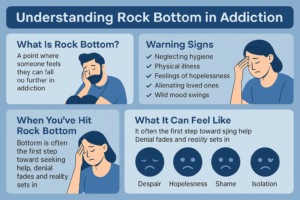
Signs You’ve Hit Rock Bottom
Recognizing the signs you’ve hit rock bottom can be painful but also life-changing. For many people struggling with addiction, this stage marks the moment when denial fades and reality sets in. Life feels unmanageable as relationships suffer, responsibilities slip away, and health begins to deteriorate, creating an overwhelming sense of loss.
So, what does rock bottom feel like? It’s often described as a deep sense of despair, hopelessness, and emotional exhaustion. You may feel trapped in a cycle of using substances to escape pain, only to find the same pain amplified afterward. Feelings of shame, guilt, and isolation become overwhelming, and even daily tasks start to feel impossible. Physically, this can manifest as fatigue, loss of appetite, neglecting hygiene, or frequent illness.
When you’ve reached this point, it may seem like recovery is out of reach, but hitting rock bottom can also bring clarity. It’s a moment when many finally see the impact of addiction and realize that help is the only way forward. Understanding these signs and emotions is the first step toward breaking the cycle and rebuilding a healthier, more stable life through professional treatment and support.
What Happens When You Hit Rock Bottom?
Not every person will hit rock bottom. Likewise, successful sobriety is not dependent upon hitting rock bottom. However, many treatment centers in Tennessee can connect with the substance abuse user during this turning point. Then, finally, there comes a moment of clarity when the user can accept help.
Feelings of failure are typical for those experiencing a substance use disorder, especially during the rock bottom moments. However, when you hit rock bottom, you can understand the effects of addiction on yourself and everyone around you. Rock bottom represents the worst moments of addiction, and looking back brings a sense of accomplishment for those who undertake treatment. With the help of addiction therapies, the substance user will understand they are not a failure.
What Does Rock Bottom Feel Like?
Rock bottom is challenging and painful. Detox is complex and carries discomfort. Those who hit rock bottom and accept help have a mountain to climb. Facing friends and family who have painfully stood by is difficult. However, the initial stages of treatment and becoming sober can be successful with the help of the treatment team and support system.
Medically monitored detox is advisable for long-term addiction. Then, the individual, group, and family addiction therapies can all work together to form a successful treatment plan for a sober future. Most people who have completed treatment do not like to think back to when they hit rock bottom. It is best to look forward, not backward, and live a happy and healthy lifestyle free from addiction.
Find Help When Someone You Love Has Hit Rock Bottom in Tennessee
When a loved one is struggling with addiction, recognizing the signs you’ve hit rock bottom can be the turning point that leads to lasting recovery. Many people wonder, “What does rock bottom feel like?” For some, it’s the moment when despair and isolation feel overwhelming, yet it also becomes the point where hope begins to return. Understanding this stage is crucial because it’s often when individuals are finally ready to seek the help they need.
At Freeman Recovery Center in Nashville, Tennessee, we specialize in guiding individuals and families through this critical phase of recovery. Our comprehensive programs address both addiction and underlying mental health challenges, including depression, anxiety, PTSD, and dual diagnosis. With evidence-based therapies, compassionate case management, and personalized treatment plans, we help each person regain balance, stability, and a renewed sense of purpose.
If you or someone you love has reached rock bottom, don’t wait to get help. Freeman Recovery Center offers free substance abuse assessments and immediate access to professional care. Our team understands that rock bottom is not the end, it’s the beginning of recovery. Contact us today to speak with an admissions specialist and start building a path toward hope, healing, and lasting sobriety.